Strategic Cyber Pre-Positioning Exposed
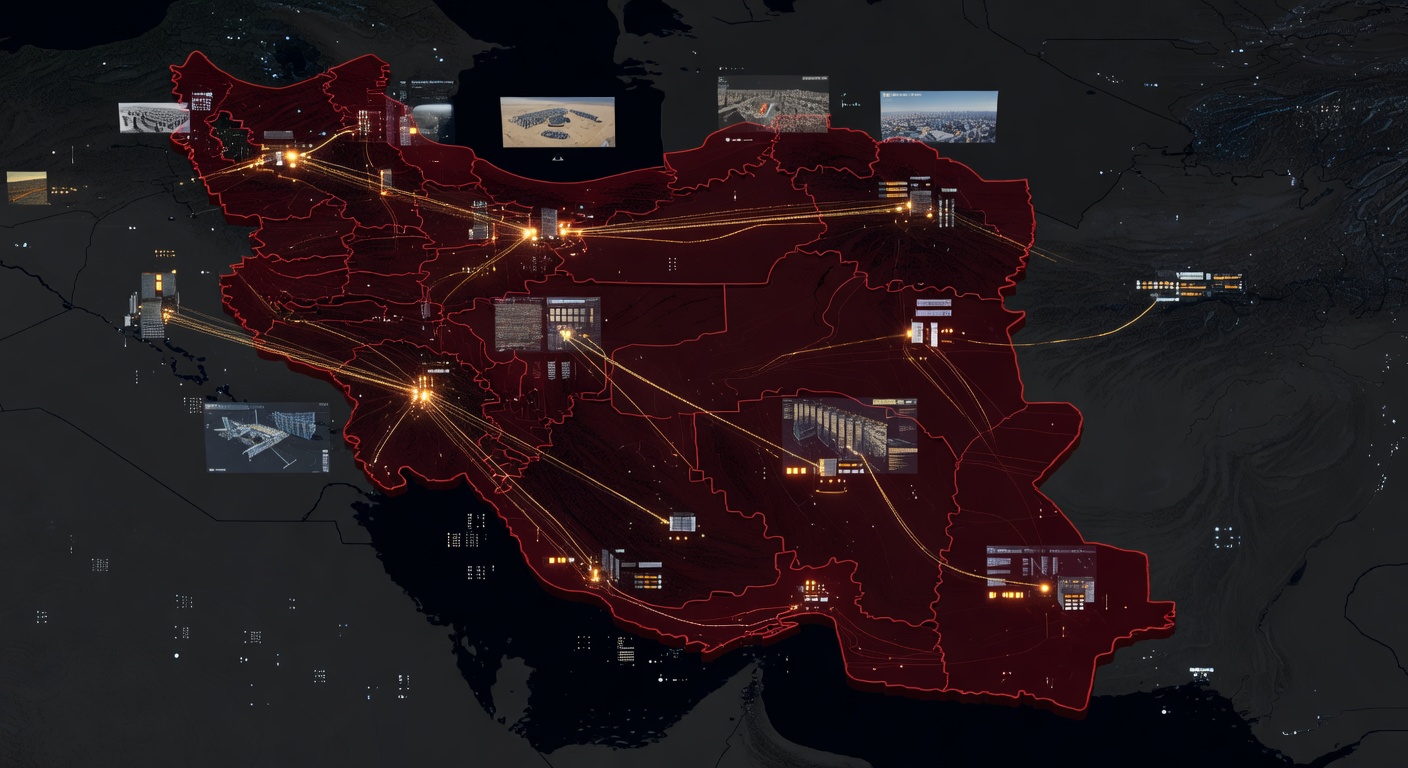
Recent threat intelligence reveals that Iranian state-sponsored actors spent six months establishing a sophisticated cyber infrastructure designed to survive military retaliation and maintain operational capabilities during the "Epic Fury" campaign. This pre-positioning strategy represents a significant evolution in nation-state cyber warfare tactics, demonstrating unprecedented operational planning and resilience engineering.
The infrastructure buildup, which utilized US-based shell companies as operational fronts, was specifically designed to weather potential kinetic strikes against Iranian cyber facilities. This approach marks a departure from traditional cyber operations that rely on domestic infrastructure, instead creating a distributed network capable of sustaining attacks even under extreme pressure.
Technical Architecture and Methodology
The Iranian operation employed a multi-layered approach to infrastructure resilience. By establishing shell companies within the United States, Iranian operators created legal entities that could register domains, lease server space, and establish command-and-control infrastructure without immediate attribution to Iranian intelligence services.
This distributed model serves multiple strategic purposes. First, it creates geographic separation between the attackers and their infrastructure, complicating takedown efforts. Second, it exploits legal and jurisdictional complexities that slow defensive responses. Third, it ensures operational continuity even if primary Iranian cyber facilities face military action.
The six-month timeline suggests extensive operational security planning. Intelligence analysts note that this extended preparation period allowed Iranian actors to establish multiple redundant pathways, test operational security measures, and create backup systems for sustained operations.
The infrastructure likely includes compromised servers, purchased hosting services, and potentially legitimate businesses serving as unwitting intermediaries. This hybrid approach makes detection and attribution significantly more challenging for defensive organizations.
Impact Assessment: Who's at Risk
The pre-positioned infrastructure is designed to support a wide range of global hacking operations. The use of US-based infrastructure suggests that American organizations could be leveraged as launching points for these attacks, or potentially become targets themselves.
The risk is not limited to specific sectors. This strategy deliberately blurs the lines between domestic and foreign infrastructure, making it difficult for organizations to assess their exposure to the threat.
The distributed nature of the infrastructure means that organizations worldwide could unknowingly host malicious infrastructure or serve as intermediary points in attack chains. This creates a global risk environment where any organization could become an unwitting participant in Iranian cyber operations.
Geopolitical Implications and Escalation Concerns
This infrastructure pre-positioning represents a concerning escalation in cyber warfare tactics. The six-month preparation timeline suggests Iranian leadership views cyber operations as a strategic capability requiring the same level of planning and resource allocation as conventional military operations.
The use of US-based infrastructure raises sovereignty and legal questions. Iranian operators are essentially weaponizing American commercial infrastructure for their global operations, creating complex legal and diplomatic challenges for response efforts.
This model could be replicated by other nation-state actors, creating a new paradigm where cyber infrastructure becomes pre-positioned globally in anticipation of future conflicts. This development complicates traditional notions of cyber deterrence and response.
How to Protect Yourself
Organizations should immediately enhance their threat intelligence capabilities to identify indicators associated with Iranian cyber operations. This includes monitoring for suspicious domain registrations, unusual network traffic patterns, and phishing campaigns targeting organizational credentials.
Implement comprehensive network segmentation to limit the potential impact of successful intrusions. Critical systems should be isolated from general network infrastructure, with strict access controls and monitoring in place.
Deploy advanced email security solutions capable of detecting sophisticated phishing attempts. Iranian actors frequently use credential harvesting campaigns as initial attack vectors, making email security a critical first line of defense.
For individuals and organizations requiring secure communications, VPN companies like hide.me offer encrypted tunnels that can help protect against man-in-the-middle attacks and traffic analysis techniques commonly employed by nation-state actors.
Establish incident response procedures specifically designed for nation-state attacks. These procedures should include communication protocols with government agencies, legal considerations for evidence preservation, and coordination with industry partners.
Regular security assessments should specifically test for advanced persistent threat scenarios. Standard penetration testing may not identify vulnerabilities that sophisticated nation-state actors could exploit.
Organizations should also implement comprehensive logging and monitoring systems capable of detecting subtle indicators of compromise. Nation-state actors often maintain persistent access for extended periods, making long-term monitoring essential.
Looking Forward: The New Threat Environment
The Iranian pre-positioning strategy signals a maturation of nation-state cyber capabilities. Rather than reactive cyber operations launched in response to geopolitical events, we're now seeing proactive infrastructure development designed to support sustained campaigns.
This development requires a corresponding evolution in defensive strategies. Traditional approaches focused on reactive threat hunting and incident response may prove insufficient against pre-positioned, resilient attack infrastructure.
Intelligence sharing between government and private sector organizations becomes even more critical when facing distributed, long-term threat campaigns. Early warning systems and threat intelligence platforms must evolve to detect infrastructure buildups before they become operational.
The international community faces new challenges in establishing norms and responses for cyber operations that span multiple jurisdictions and exploit commercial infrastructure. Legal frameworks and diplomatic mechanisms require updating to address these complex scenarios.