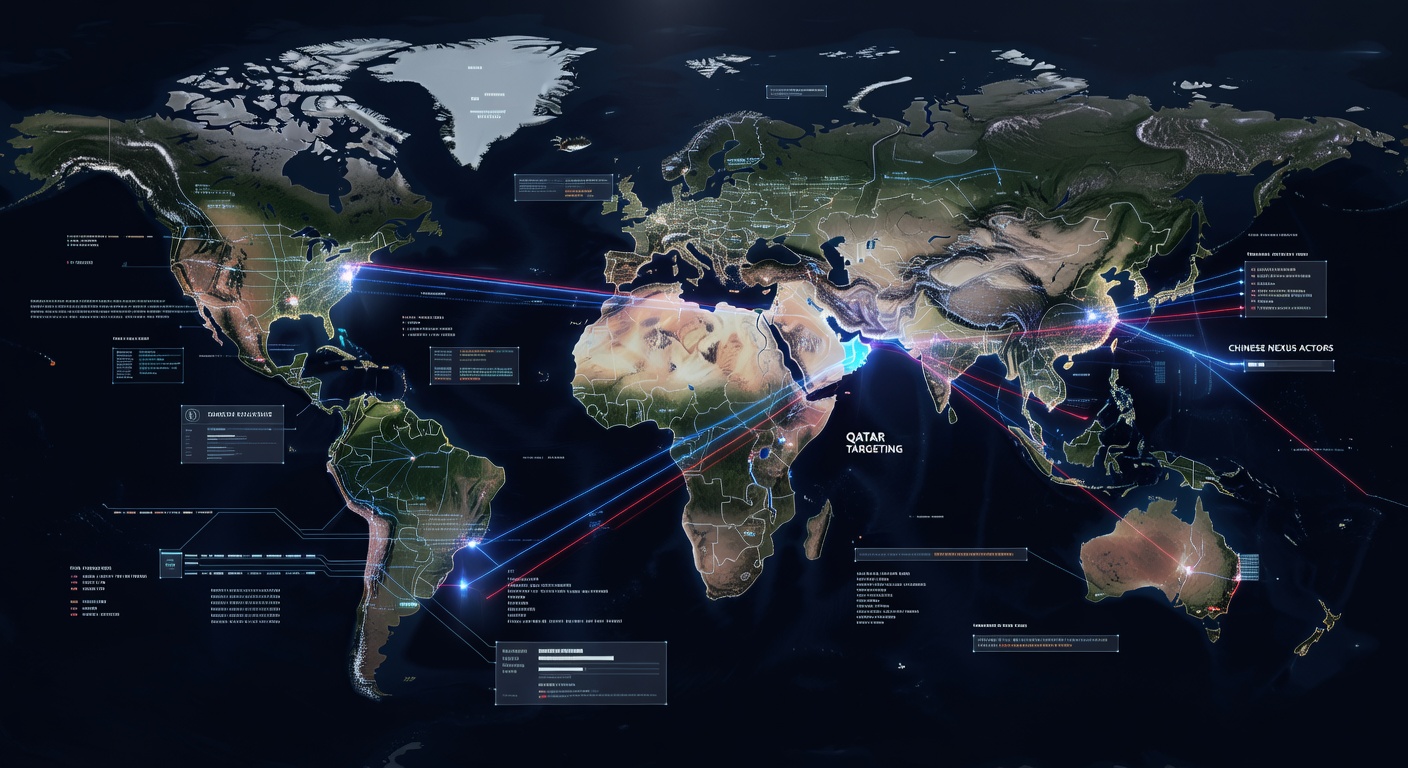
Chinese Nexus Actors Pivot to Qatar Targeting Amid Middle East Tensions
In a notable shift reflecting the fluid nature of state-sponsored cyber operations, Chinese-backed threat actors have recently redirected their focus toward Qatari entities, marking a significant departure from their traditional targeting patterns. This strategic pivot appears directly linked to escalating tensions in the Middle East and demonstrates the remarkable agility with which nation-state actors can adapt their operations to capitalize on geopolitical developments.
Background: The Evolving Landscape of Chinese Cyber Operations
Chinese state-sponsored cyber groups have historically maintained a broad targeting scope, focusing primarily on intellectual property theft, strategic intelligence gathering, and economic espionage. These operations have traditionally targeted Western nations, particularly the United States, European allies, and regional competitors in the Asia-Pacific region. However, recent intelligence indicates a marked expansion of their geographic focus, with Middle Eastern nations becoming increasingly prominent targets.
The shift toward Qatar represents more than a simple expansion of targets—it signals a strategic recalibration in response to rapidly evolving geopolitical dynamics. As tensions between Iran and various international actors have intensified, Chinese threat groups appear to be positioning themselves to exploit potential vulnerabilities and gather intelligence on key regional players.
Technical Analysis of the Qatar-Focused Campaigns
Security researchers have identified at least two distinct attack campaigns targeting Qatari organizations within recent months. These operations bear the hallmarks of sophisticated Chinese Advanced Persistent Threat (APT) groups, employing tactics, techniques, and procedures (TTPs) consistent with established Chinese cyber espionage methodologies.
The attacks have leveraged multiple vectors, including spear-phishing campaigns utilizing carefully crafted lures related to regional political developments. Initial access appears to have been gained through compromised email accounts and weaponized documents containing malicious macros. Once inside target networks, the actors have deployed custom backdoors and remote access tools designed to maintain persistent access while evading detection.
One particularly notable aspect of these campaigns is the rapid deployment timeline. Intelligence suggests that some targeting decisions were made and executed within weeks of specific geopolitical events, demonstrating an unprecedented level of operational agility. This quick-pivot capability indicates sophisticated intelligence gathering and target prioritization processes within Chinese cyber operations.
The malware families observed in these campaigns include custom variants of previously documented Chinese tools, modified specifically for operations in the Middle Eastern theater. These modifications include language localization, cultural references, and infrastructure changes designed to blend with regional internet traffic patterns.
Geopolitical Context and Strategic Implications
Qatar's unique position in Middle Eastern geopolitics makes it an attractive intelligence target. The nation maintains complex relationships with various regional powers, including Iran, while simultaneously hosting major U.S. military installations. This delicate balancing act provides Qatar with valuable intelligence on multiple fronts, making it an ideal target for foreign intelligence services seeking insight into regional dynamics.
The timing of these operations coincides with several significant regional developments, including escalating tensions between Iran and Western powers, ongoing conflicts in Gaza and Lebanon, and shifting alliances throughout the Middle East. Chinese actors appear to be positioning themselves to gather intelligence on how these conflicts might affect regional stability, energy markets, and international diplomatic relationships.
From a strategic perspective, targeting Qatar allows Chinese operators to potentially access intelligence on U.S. military operations, regional energy infrastructure, and diplomatic communications between various Middle Eastern powers. This information could prove valuable for Chinese foreign policy decision-making and economic planning.
Impact Assessment
The immediate impact of these operations remains largely classified, but the broader implications are significant. For Qatar, these attacks represent a new threat vector from a previously less active adversary. The attacks potentially compromise sensitive government communications, economic planning documents, and diplomatic correspondence.
For the broader cybersecurity community, these operations demonstrate the increasing sophistication and agility of state-sponsored threat actors. The ability to rapidly pivot targeting based on geopolitical developments suggests that traditional threat modeling approaches may need updating to account for this enhanced operational flexibility.
Regional allies and partners must now consider the possibility that Chinese threat actors may target their infrastructure and communications as geopolitical situations evolve. This uncertainty complicates defensive planning and resource allocation for cybersecurity teams across the region.
How to Protect Yourself
Organizations, particularly those in geopolitically sensitive regions, should implement several key defensive measures to protect against sophisticated state-sponsored attacks:
Enhanced Email Security: Deploy advanced email filtering solutions capable of detecting sophisticated spear-phishing attempts. Implement strict attachment policies and require additional verification for unexpected documents from external sources.
Network Segmentation: Implement robust network segmentation to limit lateral movement capabilities for attackers who achieve initial access. Critical systems should be isolated from general business networks with strict access controls.
Threat Intelligence Integration: Subscribe to threat intelligence feeds focused on APT activity and ensure security teams are regularly briefed on evolving tactics and indicators of compromise associated with Chinese threat groups.
User Training and Awareness: Conduct regular security awareness training with specific focus on recognizing sophisticated social engineering attempts that may reference current geopolitical events.
Incident Response Planning: Develop and regularly test incident response procedures specifically designed to address APT intrusions, including protocols for evidence preservation and coordination with relevant authorities.
Continuous Monitoring: Implement comprehensive logging and monitoring solutions capable of detecting subtle indicators of advanced persistent threats, including unusual network traffic patterns and abnormal user behavior.