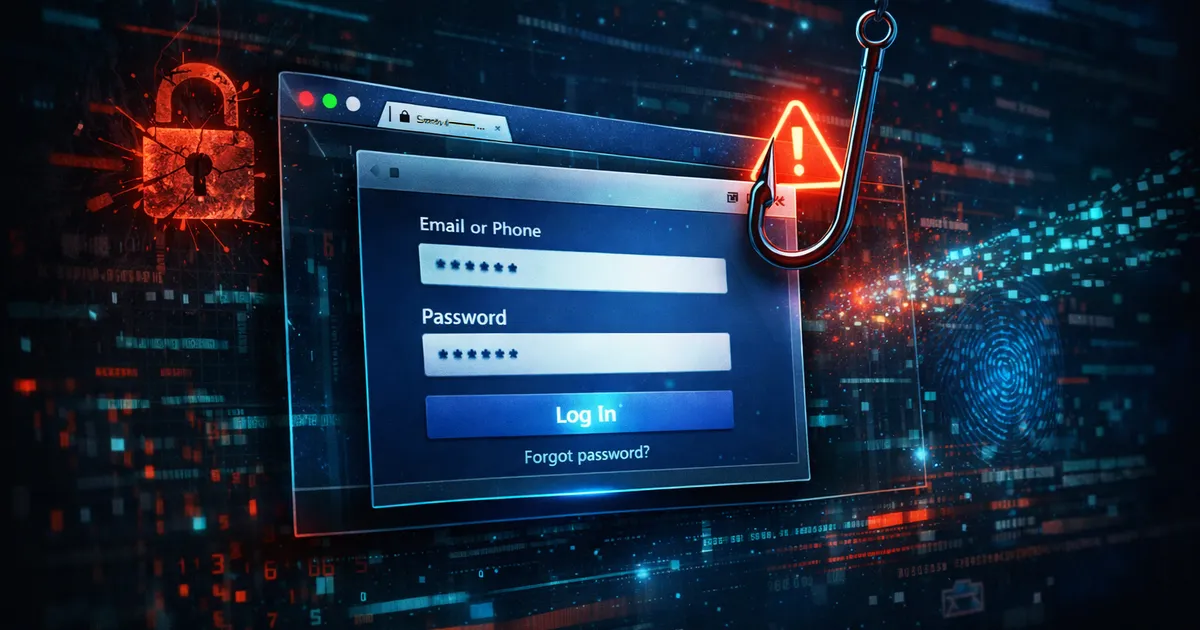
Cybersecurity researchers are warning of a rise in phishing attacks that use “browser-in-the-browser” (BitB) tricks to steal Facebook credentials. The method does not exploit a software flaw in Facebook or web browsers. Instead, attackers build a fake browser pop-up inside a webpage and make it look like a legitimate Facebook login or single sign-on window, according to Infosecurity Magazine.
The fake prompt can include a forged address bar, browser controls, and branding that closely resembles a real authentication page. Victims are lured in through phishing emails, social media messages, fake ads, or compromised pages, then asked to log in. Once entered, usernames, passwords, and in some cases one-time authentication codes are sent directly to the attacker.
The campaign reflects a broader shift in phishing operations toward polished visual deception rather than malware or browser exploits. BitB attacks work because many users are trained to trust pop-up login windows and familiar sign-in flows from Facebook, Google, or Microsoft. On desktop browsers, the fake windows can be convincing enough that users may not notice they are still inside the original malicious page.
The impact can extend beyond a single social media account. A stolen Facebook login can be used to hijack Pages, abuse ad accounts, scam contacts, or lock victims out of business assets tied to the platform. If the same password is reused elsewhere, attackers may also try the credentials on other services. Researchers and security vendors have long said phishing-resistant multifactor authentication, such as hardware security keys, offers stronger protection than codes that can be typed into a fake form. Users should also avoid logging in from unsolicited links and check whether a sign-in window is a real browser pop-up rather than a webpage imitation.
For people connecting over public Wi-Fi or unfamiliar networks, basic privacy tools such as a VPN can reduce some exposure, but they do not stop credential phishing. The main defense here is verifying the real site before entering login details.